
Obesity and Diabetes
According to the World Health Organisation (WHO), obesity is defined as the abnormal or excessive accumulation of body fat that presents a risk to health (1). Obesity is widely considered a global epidemic with more than 1 billion adults and children classed as obese in 2022; a doubling in the number of adult cases, and a quadrupling in child cases, from those recorded in 1990 (2). In the UK, it is estimated that the annual societal cost of obesity is an estimated £107 billion, with £9 billion of that costing the NHS (3). In the USA, this economic spend is $445 billion dollars, $173 billion of which are direct medical costs (4). These economic costs do not include the wider spending on conditions that come at a greater prevalence amongst obese patients, such as type II diabetes, cardiovascular disease and cancer.
Obesity is a complex, multifactorial disease, the risk of which is dependent upon both external (i.e., diet and lifestyle choices) and internal (i.e., preexisting physical and mental health conditions, medications, genetics) influences, thus rendering treatment and control of the condition challenging and as equally complex. Traditional treatment approaches have focused on the external influences of obesity, such as exercise and diet regimes and incentives. Now, more recent therapeutic interventions focus on imitating endocrine factors which play a role in appetite satiety and aid in regulating blood sugar levels, namely the incretin hormones.
Incretins
Incretins are hormones produced by the digestive system in response to food intake that play an important role in regulating blood glucose levels and appetite. The two main incretin hormones are members of the glucagon peptide superfamily; glucose-dependent insulinotropic polypeptide (GIP) and glucagon-like peptide-1 (GLP-1). GIP is a 42-amino acid peptide stored within and secreted by enteroendocrine K cells in the upper small intestine, more specifically the duodenum and proximal jejunum (5). GLP-1 is a 31-amino acid hormone secreted by L-cells which are more widely distributed in the lower intestinal tract, including ileum and colon.
GIP and GLP-1 are secreted in response to food intake. Studies have shown that rate and concentration of GIP secretion is largely dependent on the volume and composition of food intake, whereas GLP-1 secretion is similar with any meal composition (6). However, secretion of both incretins only occurs in response to oral food intake, and not intravenous administration of glucose (7).
Once secreted, incretins enter the circulatory system where they are rapidly degraded by DPP-4, with GLP-1 further metabolized in the liver. Approximately, only 10-15% of the secreted hormone is present in circulation. However, it is suggested that saturation of DPP-4 by greater amounts of incretins enables heightened actions of the hormones.
GIP and GLP-1 Actions
Both hormones have receptors expressed on numerous and similar target organs; summarized in Figure 1. Their most major site of expression is within the pancreas on pancreatic β-cells which are responsible for the secretion of insulin.
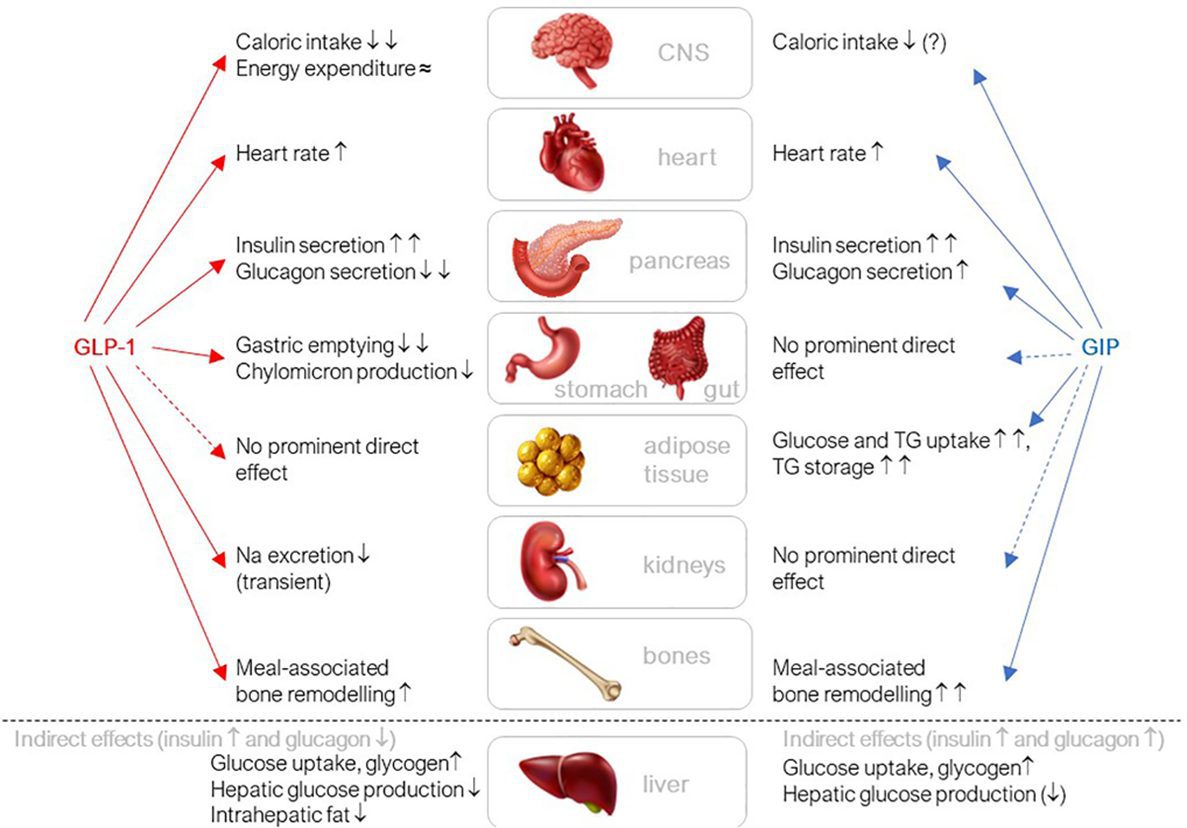
Figure 1 – Actions of incretin hormones, GLP-1 and GIP, on the organ systems of the body. Image taken from (8)
The incretin receptors, GIPR and GLP-1R, belong to the G‐protein coupled receptor family, the agonistic effect of which upon binding by GIP and GLP-1, respectively, activate Gαs dependent signaling that leads to adenylate cyclase stimulation and increased levels of intracellular cyclic adenosine monophosphate (cAMP) in pancreatic β cells. This increase in cAMP further activates protein kinase A (PKA) which is involved in several intracellular processes that contribute to the glucose-dependent secretion of insulin (9). As well as insulin secretion, it has also been shown that incretin receptor activation leads to further downstream signaling which promotes β cell survival through promotion of anti-apoptotic factors, such as bcl2, and suppression of pro-apoptotic factors, like bax (10).
Despite similarities in β cell action, they have opposing actions in regard to glucagon activity. GIP receptors are also expressed on pancreatic α cells and when activated increases the secretion of glucagon which is required when blood glucose is low. GLP-1 however indirectly suppresses glucagon action through somatostatin release by pancreatic δ cells, which is advantageous during periods of food intake (11).
Another major target organ for both GIP and GLP-1 is the central nervous system. Autoradiographic analysis showed putative binding of [125I]GIP in several brain regions, with confirmation by qPCR and Northern Blot detecting GIP and GLP-1 receptor expression in the regions of the hypothalamus known to be responsible for energy metabolism (12). Expression of these receptors in other areas of the brain implicate a role in synaptic plasticity, memory and emotion, as well as anti-apoptotic effects (8).
The most prominent difference in actions between GIP and GLP-1 are those found in the digestive system outside of the pancreas, as well as the neuronal pathways between the gut and the brain; the enteric nervous system and the vagal afferent pathways (13). GLP-1 decreases gastric emptying and intestinal motility, which together with actions on the specific regions in the hypothalamus and brainstem, induces satiety and reduces appetite. Administration of GLP-1 induces this postponement for the next meal, which contributes to reduced caloric intake and resultant weight loss.
Incretin receptors are shown to be expressed throughout the cardiovascular system, although evidence of roles and actions of GIP in this organ system is limited. GLP-1 agonism has proven to reduce the risk of myocardial ischemia and ventricular dysfunction, although the mechanism by which is not fully understood. Although, it is confirmed that GLP-1 and GIP agonism show raised heart rate and post-prandial vasodilation in subcutaneous adipose tissues, respectively as would be expected given the roles of GIP in adipose metabolism.
The primary actions of GIP show to be regulating insulin secretion. However, GIP receptors are also expressed on adipocytes, and previous evidence demonstrates GIP actions promoting fat deposition and adipocyte differentiation, as well as elevated levels of GIP during fasting periods in obese individuals (14). Indeed, GIP receptor deficiency has shown to have a protective role against diet-induced obesity (15), and GIP was considered an obesogenic hormone (12). However, GIP/GLP-1 receptor combined agonist therapeutics show to have the best therapeutic outcome in the treatment of obesity and type II diabetes.
Incretin-based Therapeutics
The actions of GIP and GLP-1 contribute to maintaining glucose homeostasis and energy balance, as well as providing cardiovascular and neurological benefits in the case of GLP-1 agonism. Incretin hormones are the basis of important treatments for type 2 diabetes and now more recently obesity, namely GLP-1 receptor agonists which mimic or enhance the physiological effects of GLP-1.
The first GLP-1 receptor agonist approved for clinical use was Exenatide (aka Byetta). A GLP-1 mimetic, it is the synthetic version of exenatide-4 which was isolated from the saliva of a Gila monster lizard during investigations into its ability to eat only twice annually. Exenatide was found to share 50% amino acid homology to GLP-1, with a longer half-life, and markedly reduced side effects than high administration of pure GLP-1. It’s use in the treatment for type II diabetes was approved in 2005 as a twice daily injection with newer generations of GLP-1 agonists arising within the next decade that were longer acting (e.g., Dulaglutide (Trulicity)).
In the treatment of type II diabetes, increased insulin secretion, reduced appetite and prolonged satiety as a result of GLP-1 agonism, lowers basal blood sugar levels and causes weight loss, the latter of which cannot be achieved with insulin treatment alone. Furthermore, the cardiovascular benefits of GLP-1 agonism reduce the risk of heart attacks and strokes; common occurrences in type II diabetic patients (16). Obesity is the major risk factor of developing type II diabetes, with approximately 80-90% of patients with type II diabetes being overweight or obese (17, 18). GLP-1 agonists are now amongst the first line of treatments for overweight and obese individuals with type II diabetes.
The overarching effect of weight management that GLP-1 agonists elicit in the treatment of type II diabetes led to the approval of Liraglutide (Saxenda) in 2014 to specifically treat obesity. Innovation of more advanced GLP-1 agonists continues to this day, with the first pill form of Semaglutide (Wegovy) approved in 2026 and the availability of a combination GIP/GLP-1 receptor agonist therapeutic (i.e., Tirzepatide (Mounjaro)), which has shown to have more marked weight loss than GLP-1 agonists alone (12).
Contrary to its status as the ‘obesogenic’ hormone, long-term high doses of GIP and synthetic GIP results in reduced food intake and body weight; the mechanism by which this occurs is unknown. One suggestion is long-term exposure and saturation of GIP receptor agonism causes desensitisation creating an antagonistic effect, which has been reported in adipocytes, but is yet to be confirmed in other target organs (19).
Summary
For the first time in the USA, 2026 has reported a sustained decline in adult obesity which is directly linked to the widespread adoption of incretin-based therapeutics (4). With newly approved use in the UK and other countries around the world, and the continued fight against obesity, the call for new and more advanced incretin-based therapeutics remains in high demand. Thus, in terms of their research and development, using physiologically relevant models is imperative for reliable and accurate data.
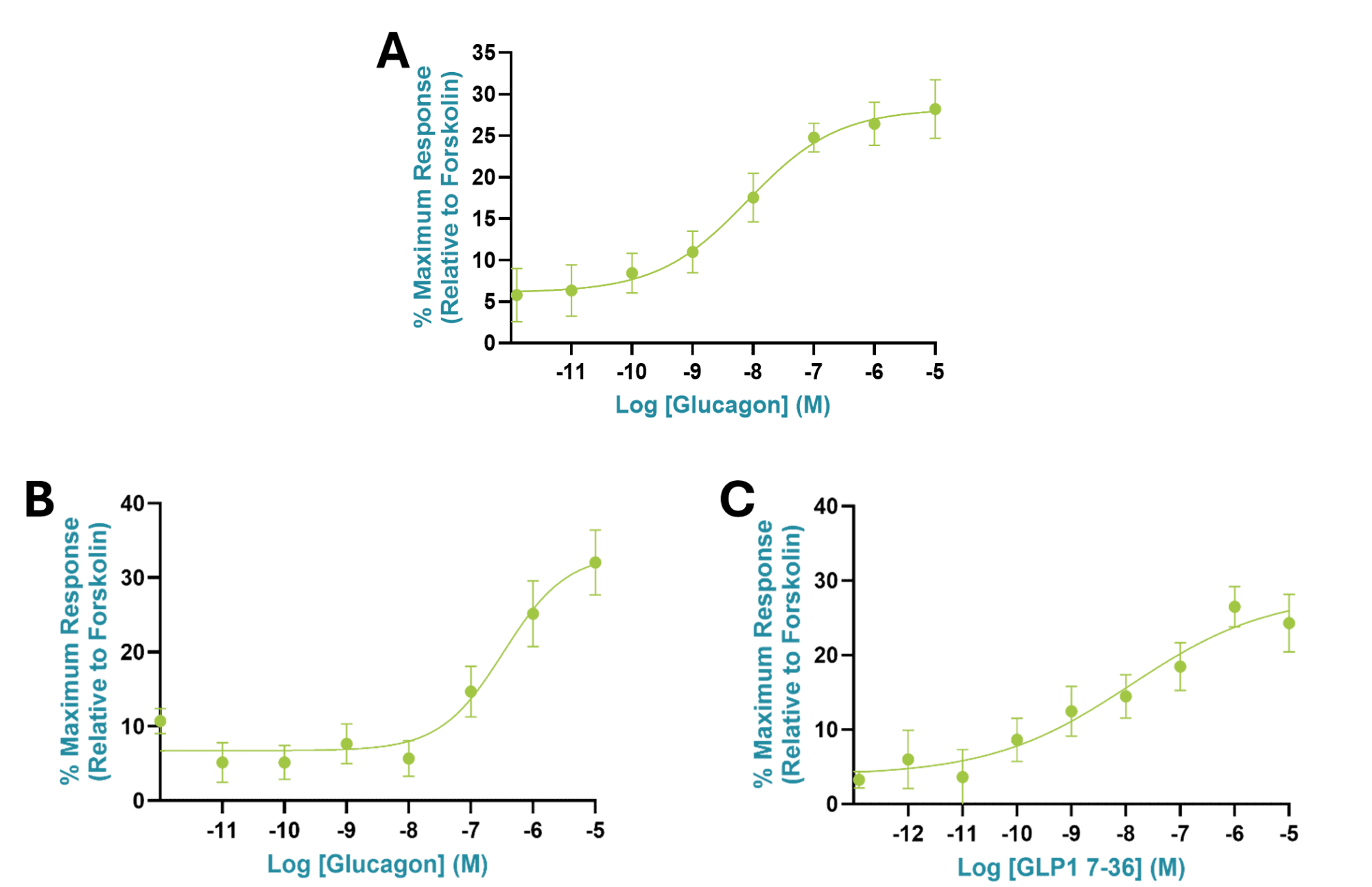
As the development of GLP-1 receptor agonists, dual GIP/GLP-1 agonists, and emerging triple agonists continues, understanding how these compounds behave in physiologically relevant systems is becoming increasingly important. Whilst recombinant cell lines provide valuable information during early drug discovery, differences in receptor expression, receptor reserve and the availability of intracellular signalling proteins can influence the potency and efficacy observed. Combining radioligand binding assays to investigate receptor affinity and ligand interactions, receptor autoradiography to examine receptor distribution within native tissues, and functional cAMP assays to measure downstream G protein signalling, provides a more comprehensive understanding of incretin receptor pharmacology. Receptor occupancy studies can further establish target engagement, whilst biophysical techniques such as surface plasmon resonance (SPR) can provide additional information on binding kinetics where suitable assay systems are available. Importantly, functional cAMP responses have been demonstrated at endogenous glucagon receptors in rodent kidney and pancreatic membranes, alongside GLP-1 receptor responses in pancreatic membranes (Figure 2), highlighting the potential of native tissue models for investigating incretin signalling. This becomes particularly relevant when developing multi-receptor agonists, where differences in receptor expression and signalling between tissues may influence the overall pharmacological response. Integrating binding affinity, receptor distribution, target engagement and functional potency and efficacy within a complementary experimental approach provides a stronger foundation for understanding compound activity beyond recombinant systems. Ultimately, the combination of these techniques with endogenous receptor pharmacology offers valuable insights for incretin-based drug discovery, supporting the development and selection of more precisely characterised therapeutic candidates for obesity and type 2 diabetes.
Bibliography
- WHO. Obesity [Internet]. WHO. 2020 [cited 2026 Nov 16]. Available from: https://www.who.int/health-topics/obesity
- Phelps NH, Singleton RK, Zhou B, Heap RA, Mishra A, Bennett JE, et al. Worldwide trends in underweight and obesity from 1990 to 2022: A pooled analysis of 3663 population-representative studies with 222 million children, adolescents, and adults. The Lancet [Internet]. 2024 Feb 1 [cited 2026 Nov 16];403(10431). Available from: https://www.thelancet.com/journals/lancet/article/PIIS0140-6736(23)02750-2/fulltext
- Gov.uk. Obesity healthcare goals [Internet]. GOV.UK. 2024 [cited 2026 Nov 16]. Available from: https://www.gov.uk/government/publications/life-sciences-healthcare-goals/obesity-healthcare-goals
- Terushkin DS. Obesity statistics in America 2026: Rates, costs, health impact & treatment trends [Internet]. GoalBMI Wellness. 2026 [cited 2026 Nov 16]. Available from: https://wellness.goalbmi.com/obesity-statistics-america-2026/
- Ritter J, Flower RJ, Henderson G, Loke YK, Rang HP. Rang and Dale’s pharmacology. 10th edn. Edinburgh: Elsevier; 2024.
- Carr RD, Larsen MO, Winzell MS, Jelic K, Lindgren O, Deacon CF, et al. Incretin and islet hormonal responses to fat and protein ingestion in healthy men. American Journal of Physiology-Endocrinology and Metabolism. 2008 Oct;295(4):E779–84.
- Brown JC, Mutt V, Pederson RA. Further purification of a polypeptide demonstrating enterogastrone activity. J Physiol [Internet]. 1970 July [cited 2026 Nov 16];209(1):57–64. Available from: https://pubmed.ncbi.nlm.nih.gov/5499047/
- Nauck MA, Quast DR, Wefers J, Pfeiffer AFH. The evolving story of incretins (GIP and GLP‐1) in metabolic and cardiovascular disease: A pathophysiological update. Diabetes, Obesity and Metabolism. 2021 Sept;23(S3):5–29.
- Seino Y, Fukushima M, Yabe D. GIP and GLP-1, the two incretin hormones: Similarities and differences. Journal of Diabetes Investigation [Internet]. 2010 Feb [cited 2026 Nov 16];1(1–2):8–23. Available from: https://pmc.ncbi.nlm.nih.gov/articles/PMC4020673/
- Kim SJ, Nian C, Widenmaier S, McIntosh CHS. Glucose-dependent insulinotropic polypeptide-mediated up-regulation of beta-cell antiapoptotic Bcl-2 gene expression is coordinated by cyclic AMP (cAMP) response element binding protein (CREB) and cAMP-responsive CREB coactivator 2. Mol Cell Biol [Internet]. 2008 Mar [cited 2026 Nov 16];28(5):1644–56. Available from: https://pubmed.ncbi.nlm.nih.gov/18086876/
- de Heer J, Rasmussen C, Coy DH, Holst JJ. Glucagon-like peptide-1, but not glucose-dependent insulinotropic peptide, inhibits glucagon secretion via somatostatin (receptor subtype 2) in the perfused rat pancreas. Diabetologia. 2008 Sept 16;51(12):2263–70.
- Fukuda M. The role of GIP receptor in the CNS for the pathogenesis of obesity. Diabetes. 2021 June 27;70(9):1929–37.
- Ronveaux CC, Tomé D, Raybould HE. Glucagon-like peptide 1 interacts with ghrelin and leptin to regulate glucose metabolism and food intake through vagal afferent neuron signaling. The Journal of Nutrition [Internet]. 2015 Feb 4 [cited 2026 Nov 16];145(4):672–80. Available from: https://www.ncbi.nlm.nih.gov/pmc/articles/PMC4381768/
- Smarkusz-Zarzecka J, Radziszewska M, Gofron KK, Ostrowska L. Glucose-dependent insulinotropic polypeptide (GIP) signaling in visceral and subcutaneous adipose tissue: Implications for obesity and metabolic disease—A narrative review with a structured literature search. Reviews in Endocrine and Metabolic Disorders. 2026 Oct 22;.
- Miyawaki K, Yamada Y, Ban N, Ihara Y, Tsukiyama K, Zhou H, et al. Inhibition of gastric inhibitory polypeptide signaling prevents obesity. Nature Medicine. 2002 June 17;8(7):738–42.
- Nauck MA, Quast DR, Wefers J, Meier JJ. GLP-1 receptor agonists in the treatment of type 2 diabetes – state-of-the-art. Molecular Metabolism [Internet]. 2021 Apr [cited 2026 Nov 16];46(46):101102. Available from: https://www.ncbi.nlm.nih.gov/pmc/articles/PMC8085572/
- UCSF. Type 2 diabetes | UCSF Department of surgery [Internet]. Ucsf.edu. 2025 [cited 2026 Nov 16]. Available from: https://transplantsurgery.ucsf.edu/condition/type-2-diabetes
- American Society for Metabolic and Bariatric Surgery. Type 2 diabetes and metabolic surgery [Internet]. American Society for Metabolic and Bariatric Surgery. 2024 [cited 2026 Nov 16]. Available from: https://asmbs.org/resources/type-2-diabetes-and-metabolic-surgery-fact-sheet/
- Killion EA, Lu SC, Fort M, Yamada Y, Véniant MM, Lloyd DJ. Glucose-dependent insulinotropic polypeptide receptor therapies for the treatment of obesity, do agonists = antagonists? Endocrine Reviews. 2019 Sept 12;41(1):1–21.
Recent Comments