
by Mark Bird | Oct 15, 2026 | News
We were delighted to have our Principal Investigator, Dr Sarah Routledge, presenting her latest research at ELRIG. Sarah’s poster, “Functional GPCR Assays in Native Tissues: cAMP Measurement in Rodent Kidney and Pancreas”, showcases our ongoing work to develop... by Melissa Finlay | Oct 13, 2026 | News
Who Was Ada Lovelace, and What Are We Celebrating? Born 10 December 1815 into the aristocratic family of the scandalous poet, Lord Byron, Ada Lovelace was a keen scholar in Maths and Science, and overcame barriers set by her tutor who felt, as a woman, she would be...

by Mark Bird | Jul 20, 2026 | News
Why does native tissue pharmacology matter? Native tissue preserves physiological receptor density, multi-receptor co-expression, endogenous signalling stoichiometry, and post-translational modifications. Compounds profiled in endogenous systems deliver data that...
by Mark Bird | Jul 15, 2026 | News
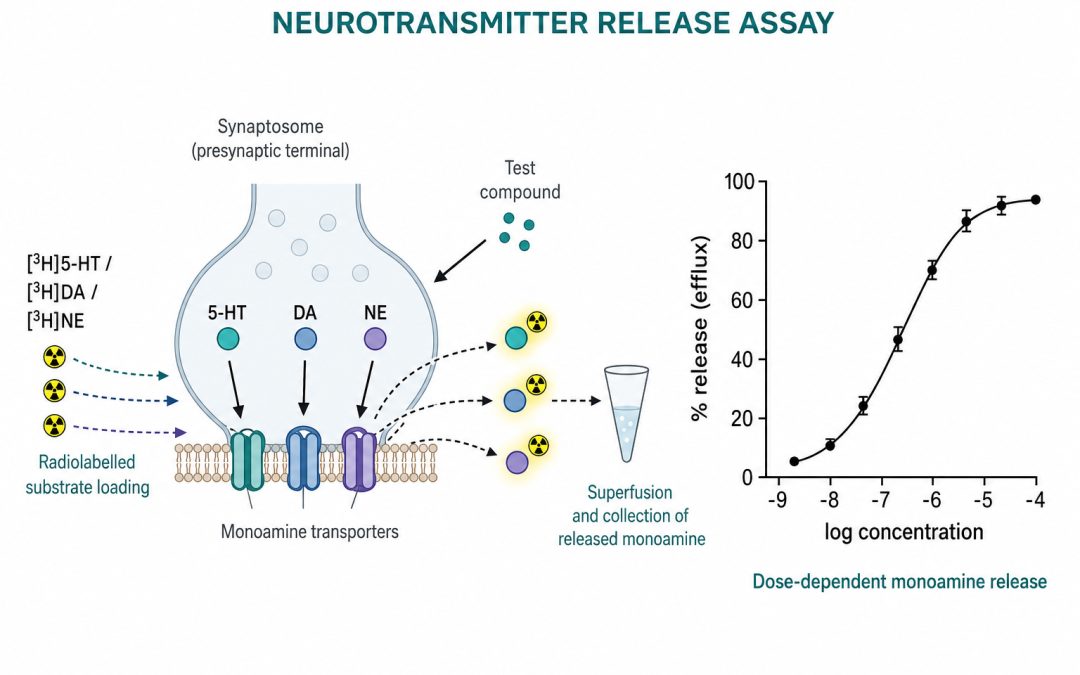
What is a neurotransmitter release assay? A neurotransmitter release assay measures the ability of compounds to evoke or modulate release of radiolabelled serotonin, dopamine, or norepinephrine from preloaded synaptosomes or transporter-expressing cells. It...

by Mark Bird | Jul 8, 2026 | News
What is ex vivo receptor occupancy? Ex vivo receptor occupancy quantifies the percentage of target receptors occupied by a drug in tissue harvested from dosed animals. It uses quantitative autoradiography to provide direct evidence of target engagement with regional...

by Mark Bird | Jul 1, 2026 | News
What role do PROTACs play in targeting tau? PROTACs are bifunctional molecules that recruit E3 ubiquitin ligases to mark tau for proteasomal degradation. They can act sub-stoichiometrically and do not necessarily require sustained target occupancy, but tau degradation...
Recent Comments